

Gardening as Hope
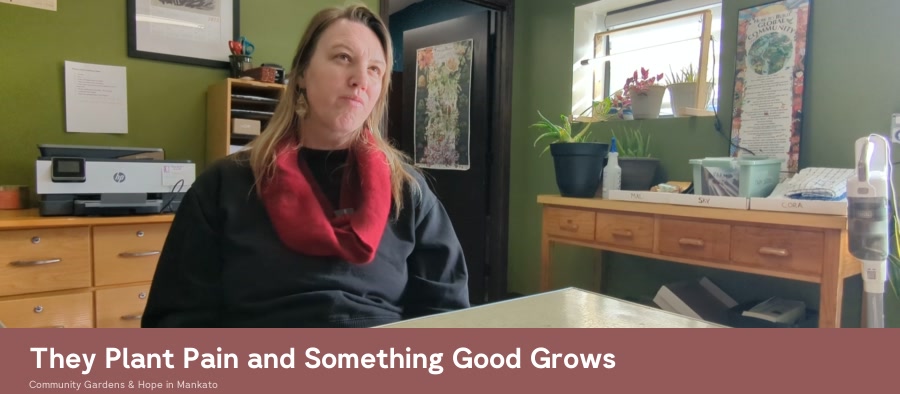
“It’s hard to not have hope when you are in an outdoor space.” The words of Laura Marsala, Executive Director of Living Earth Center, absolutely ring true. I have never thought of myself as outdoorsy, but on a bad day when I am feeling helpless, hopeless, or anxious, I have learned that getting my dog to take me for a walk always makes me feel at least a little bit better. Sometimes a lot better. The more I can be present to the natural world around me, the less I am trapped inside my head. And on a bad day, the natural world is a much happier place to exist inside of than the dusky loops and corners of my mind.
While going for a walk feels like entry-level self-care, planting a garden might be the intermediate class. And when you do that planting inside of a community of folks who are also intimately connected to the Earth, it feels like the master course. It feels like communal growth, creation, and healing.
Planting seeds, in and of itself, is an act of hope. I don’t care if you are a first grader observing a bean seed sprout inside of a baggie before pushing it into a cup of dirt, an amateur gardener fumbling your way into a new growing season, or a master gardener sitting down with a seed catalog in January. The fact that big things come out of very tiny things is thrilling. Having some hand in that creation taps something in the human heart. The fact that you get to feed and be fed as a result of it is an experience in love and pride.
Here in Duluth, my husband and I are in our second year of starting tomatoes from seed. Last year, he prepped 15 five-gallon buckets and took his best guess on the placement in our small, hillside back yard. We over-watered in the beginning and later learned that the plants were calcium deficient. I quickly horded eggshells that I washed, dried, and ground down to powder. I’m still not positive that it made much of a difference. We anchored vines to fence lines that didn’t get optimal sun. We had some great tomatoes, we had some that came in with rotten spots on the bottom. But, like life, you take what happens, course correct as you can along the way, and circle back on lessons learned as you step into your next attempt. We started our seeds a little earlier this year, misted them a little less, and opted for herb seeds in the second tray. I bought fertilizer meant specifically for tomato plants. We plan to open up the compost pile and use what my friend calls “black gold” to fill the buckets and supplement the beds.
I find the cyclic nature of gardening soothing. In the spring, beds are covered with the remains of the year before. Turning the soil over is a full sensory experience. The smell of rich dirt folded into the sweet rot of spring pulls me further into the experience. Over the years, and various sized beds, I’ve challenged myself to use a hand tiller. I’ve never had a garden big enough to feed a family, but between vegetables and perennials, I’ve earned my share of sore muscles. It takes a bit longer than it used to, but I feel like a bit of a bad ass when I’m done. Even the stiffness of getting out of bed the next morning reminds me of what my body is still capable of.
When everything is turned over and the dirt is soft, when I have folded in whatever bit of knowledge I’ve gained and done my best to prep my beds for a good season, that’s when I just can’t wear gloves anymore. I have to feel the dirt. Hold it in my hands. I need to feel my fingers pulling shallow holes open for seedlings and bringing the dirt back around to gently press the plant into place. I need to pinch seeds from my open palm and sprinkle them into the trench. I want to touch the dirt I brush in place to cover them. It feels like necessary tenderness. But I can’t say if it is what the plant needs or what I need. All I can say for sure is that when the beds are filled and smoothed and everything is gently watered, my heart is filled. When the tools are cleaned and put away, after I’ve brushed myself clean enough to make my way to the shower and into clean clothes, I go back to the garden. Maybe with a beer in hand later that first night, but in the days and weeks to come, I go back and back and back. I revisit my garden like the object of a junior high crush. I preen and fuss with it after work. I walk barefoot through it in my jammies with my morning coffee. I hold awe at each stage of growth and gush about it over dinner with my husband.
A garden is a created thing because it is loved and nurtured. When I go to the garden, I am not thinking about the world my grandson is inheriting. I’m not thinking about how safe my son may or may not be as he finishes his training in the Navy. When I am in the garden, I hold hope. I hold hope for growth and maybe even for the possibility of pushing up through history with something tender and new. Something better that can be tended and strengthened into something that truly feeds. When I am in my garden, I celebrate the miracle that is another growing season. I feel myself inside the mystery of life, and I am fed by it.


Are you a storyteller with deep roots in your community?
Join our network. We provide the platform and resources. You share your indispensable local focus and insights to a national audience hungry for authentic, ground-level journalism.