

Doc Wortman and the Ellis Street Singers
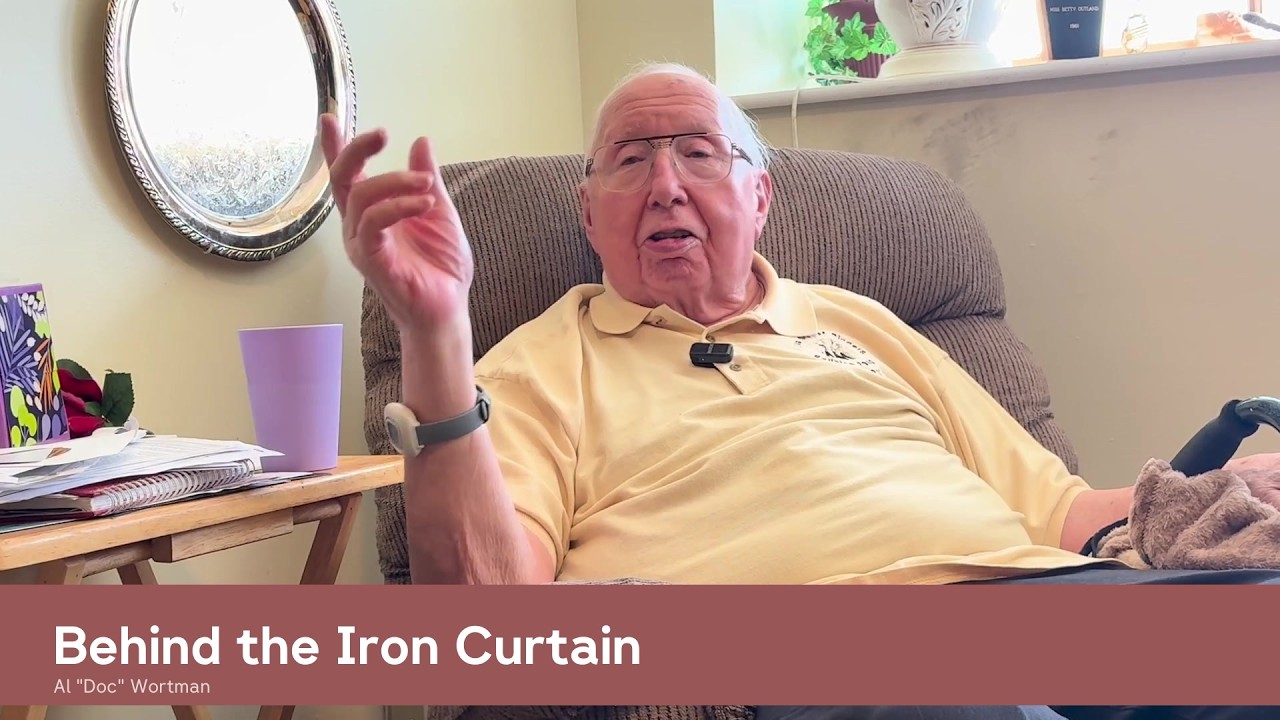
Al "Doc" Wortman taught in the Music Department at Mankato State University from 1966 to 1995 and directed the Ellis Street Singers for nearly all of it. This is a series of conversations with him about how the group began, where it went, and what it meant to the students who were in it.
How it started. Around 1968, a few students asked Doc for a show choir. He said it sounded like fun, put up a flyer in the Performing Arts Center and held auditions. Ten students came, plus a piano player, a guitarist and a drummer. They found some music and put on a concert in the Recital Hall. It grew into one of the best-known groups on campus, and then across Mankato. Watch How a flyer in the Performing Arts Center started a campus institution.
The name and the World's Fair. Doc held a contest among the students, and the name they picked stuck for the next quarter century. Around then, word came about the World's Fair in Spokane. Doc and C. Ron Olauson, who ran a children's theater group, decided to go. Both groups auditioned and each performed at least twice. The next year's auditions drew thirty or forty people for about twelve singing spots. Watch The Ellis Street Singers got their name from a contest among the singers.
Why people stayed. John Kind was in the group five years, and so was drummer Randy Munson. The group had a theme song, arranged by a member and built on "Celebrate," and they opened with it every year but one. Everybody danced, so each year they hired a choreographer from outside the group, because students listened better to an outsider. Watch The theme song, the choreographer, and the students who stayed five years.
The high school clinic. For eight or ten years the group took over the whole student union for a day. High school show choirs came to perform and compete in three size classes, with outside judges. About a thousand students came, and some later enrolled at Mankato State to be in the group. It stopped for about a year when the student union, which funded it, insisted it be student-led. Doc tried it, but things didn't get done and students wouldn't listen to a peer, so he dropped the group. Watch A thousand high schoolers filled the ballroom. Then it stopped for a year..
The Christmas shows that paid for the tours. Around 1980 a man walked into Doc's office. He owned the Edgewood restaurant in Cannon Falls and wanted entertainment for an Old Fashioned Christmas show. Doc agreed to 13 shows across a weekend, three weekends every December. The students ate from the smorgasbord and slept in the motel next door. They did it for 25 years, and the money paid for the World's Fairs, Western Europe and a last trip to Australia. The Edgewood is closed now. Watch A stranger walked into his office and booked 13 Christmas shows and How many shows? Between 15 and 20.
Behind the Iron Curtain. The group toured three World's Fairs and twice went behind the Iron Curtain, to Russia and Poland, and two years later to Bulgaria and Romania, as cultural ambassadors with Friendship Ambassadors. Before the Russia trip, university president Margaret Preska sat the students down on her living room floor and taught them Russian phrases. Doc also explains the group's scholarships. You had to have been in the group a year to get one, and he wouldn't give them to freshmen. They started at four and grew to eight, paid for from the group's performance earnings. Watch They performed in Russia and Poland from behind the Iron Curtain.
Auditions every year. Doc made everyone re-audition every year, and a few didn't get back in. It wasn't about talent. Some didn't help load out after concerts, some didn't do what they agreed to, and some didn't seem to care. His answer was "even if you're good, we can't use you." He was protecting the camaraderie, and it worked: four reunions since he retired, the last with a hundred people. Watch Even if you're good, we can't use you and He made them audition every year.
Musicals. A day with twelve singers and one piano player: rehearse in the morning, again in the afternoon, perform at the casino that night. They did Phantom of the Opera and Fiddler on the Roof, and Doc sang "If I Were a Rich Man." He conducted Fiddler three times at Mankato State. The first one sold out, standing room too, until the fire department stopped ticket sales. Watch They sold standing room for Fiddler until the fire department stepped in.
Keep up with what's going on in the Mankato area by subscribing to our YouTube channel.
Are you a storyteller with deep roots in your community?
Join our network. We provide the platform and resources. You share your indispensable local focus and insights to a national audience hungry for authentic, ground-level journalism.